Growth
Substack writers who added video grew new subscribers by 70%
We asked around 200 volunteers who had been publishing video alongside their posts for two weeks what changed. The numbers were larger than I expected, and they came from distribution rather than from the videos themselves.
What we asked, and who we asked
Roughly 200 Substack writers using Article Video Studio volunteered to report back after two weeks of turning their posts into videos. Two weeks is short and the group volunteered rather than being sampled, so treat this as a strong signal rather than a controlled study. I will come back to what that caveat costs at the end.
The instruction was simple: keep publishing the way you already do, but turn each issue into a video as well, and put that video where video already gets distributed.
1. Total audience went up about 4x
This is the number that surprised me least once I looked at where it came from. The writers who saw it were the ones who published the videos off Substack — YouTube, Instagram, TikTok, and LinkedIn — rather than only embedding them in the email.
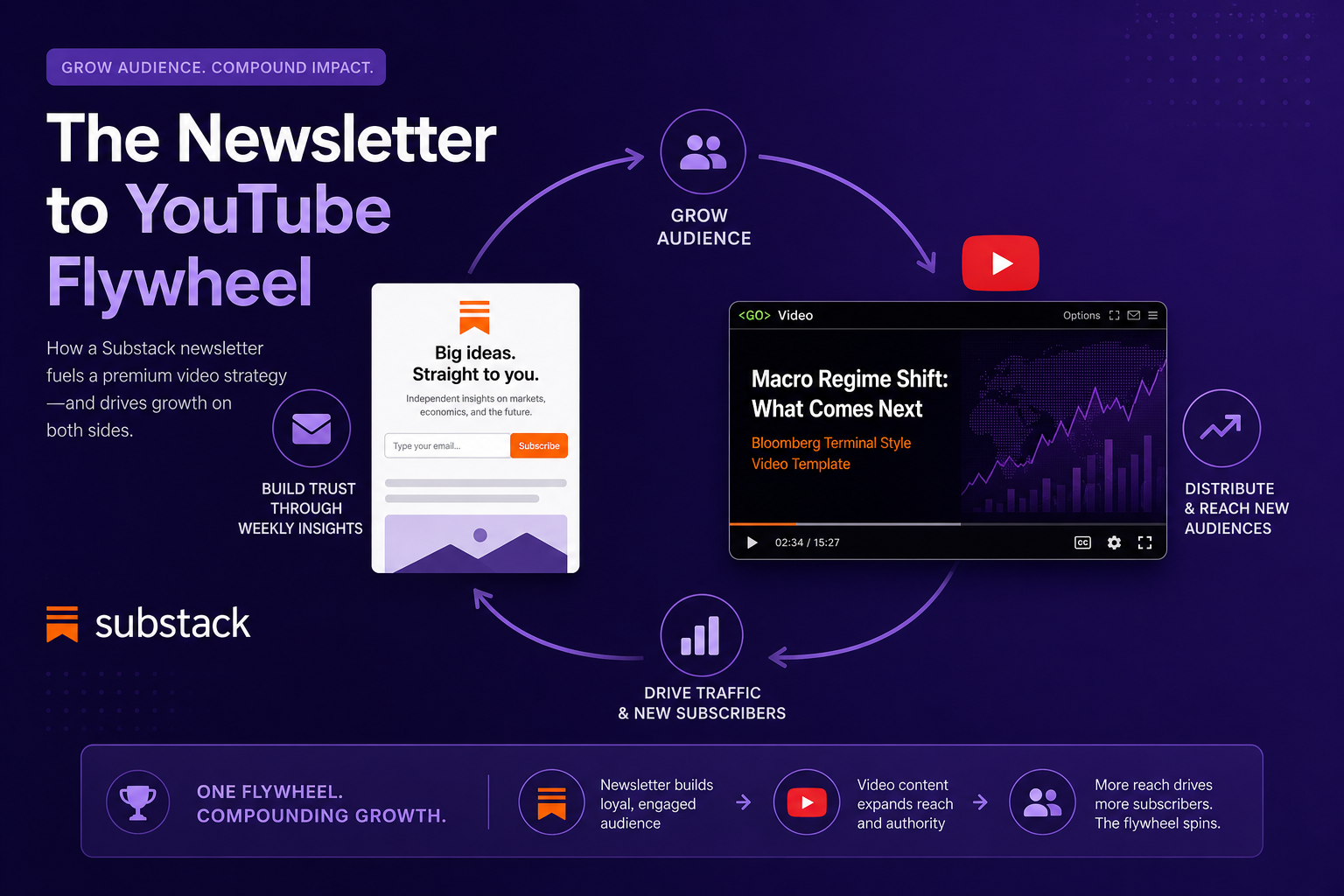
That makes sense mechanically. A newsletter reaches the people who already subscribed. A video on YouTube or TikTok is shown to people who have never heard of you, by a system whose entire job is finding them. You did not make your writing four times better; you made it visible in four places that were previously closed to you because they do not distribute text.
- The lift came from off-platform publishing, not from the video existing.
- YouTube and TikTok surface content to non-subscribers; email does not.
- One issue became four uploads plus the original post.
2. New subscribers went up 70%
This is the headline. If you were adding 100 subscribers a week before, the writers in this group were adding about 170 after two weeks of publishing video alongside their posts.
The mechanism is the same as above, one step further along. Video reached people outside the subscriber list, and a share of those people followed the link back and subscribed. Nothing about the writing changed. The funnel simply got a wider mouth.
Seventy percent is a large number for a change that does not touch the product you are actually selling, which is your writing. It is the closest thing to a free lunch I have seen in newsletter growth, and the cost is that you now publish in two formats instead of one.
3. Open rate improved by about 20%
Writers reported roughly a 20% lift in open rate, and said people seemed to spend longer with the emails themselves. Time-on-email is notoriously hard to measure, so I would weight that part lightly.
The open rate part is easier to believe. If a reader has seen your face, your voice, or your visual style on another platform before your email lands, the subject line is arriving from someone recognisable rather than from a name in a list. Recognition is most of what an open rate measures.
The honest caveats
These are self-reported figures from volunteers who agreed to try something new, over two weeks. That selects for engaged writers who were already inclined to put effort in, and two weeks is short enough that novelty and seasonality are both live explanations for part of the effect.
What I am confident about is the direction and the mechanism, because the mechanism is boring and well understood: platforms that distribute video will show your work to strangers, and platforms that distribute email will not. Everything above follows from that. Whether your own numbers land at 70% or 25% depends on your niche and how consistently you publish.
How to run this yourself
The version the group ran is not complicated. Take the issue you just published, turn it into a video that follows the same structure, and upload it to YouTube, Instagram, TikTok, and LinkedIn with a link back to the post. Then embed it at the top of the email as well.
The reason this is now a few minutes rather than an afternoon is that the video is built from the post you already wrote — your headings, your argument, your examples — instead of being generated from a prompt. If you want the reasoning behind why that distinction matters for whether anyone watches, it is the subject of a separate piece on this blog.
Frequently Asked Questions
Where did these numbers come from?
Around 200 volunteer Substack writers using Article Video Studio, self-reporting after two weeks of publishing video alongside their posts. It is a volunteer group over a short window, not a controlled study, so read it as a strong directional signal.
Do I have to post the videos off Substack to see the effect?
That is where the growth came from. The 4x audience and 70% subscriber figures belong to writers who published to YouTube, Instagram, TikTok, and LinkedIn. Embedding the video in the email alone helps engagement but does not reach anyone new.
Do I need to be on camera?
No. The videos in this group were built from the written posts — structure, headings, and examples rendered into designed templates with a synthesised narrator. No filming was involved.
How long does making the video take?
Minutes per issue, because the post supplies the script and the structure. The work that used to make this an afternoon job — scripting, layout, timing — is what the pipeline handles.